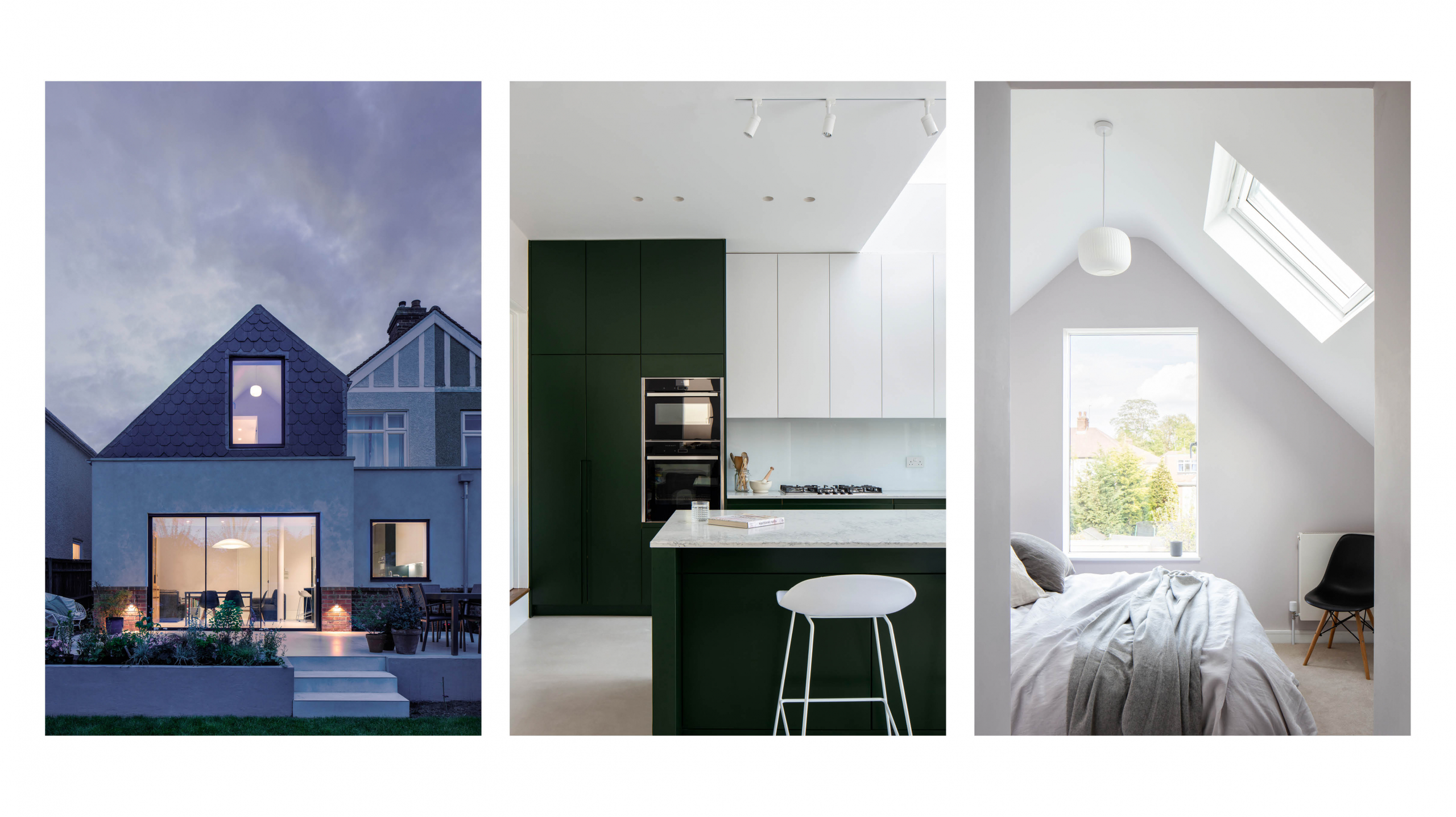
Many buyers see a loft conversion as the perfect way to add space and value without moving again later. However, not every loft is a straightforward candidate. Before you put in an offer, it’s vital to know what to look for — and what pitfalls could lie ahead. Alongside your survey, an impartial, architect-led pre-purchase appraisal — for example, via The Potential House — can sense-check feasibility, planning risk and likely costs before you commit.
At Design for Me, we are often asked: can this loft be converted? While many lofts can be transformed, each home is different. Here are the essential things to check before you buy.
Loft extension image above by Oliver, architect on Design for Me. See their full profile and shortlist them for your project here
Why impartial pre-purchase advice helps
Architectural due diligence, not design upsell
• Independent view of feasibility (structure, head height, layout options)
• Early scan of planning risk (PD limits, Conservation/Article 4, precedents)
• High-level cost and risk sense-check
The Potential House is independent (no follow-on design work), so the guidance focuses solely on whether the property is the right investment.
1. Is There Enough Ceiling Height for a Loft Conversion?
We’ve written an article on this very question which goes into much more detail here, but in summary, if you want to sell your house in the future, I’d recommend sticking to these:
Ceiling height guidelines
Minimum ceiling height : 210 cm (200cm if really pushing it!)
Standard ceiling height: 240 cm
Good ceiling height: 260 cm
You could get away with 210 cm – 240 cm for studies, bathrooms, children’s rooms etc. quite easily, but I’d recommend keeping above 240 cm for living areas and master bedrooms if you can. read more here…
2. What Type of Roof Structure Does the Loft Have?
Cut roof (typical in pre-1960s homes): built on site; usually offers more usable volume and simpler alterations.
Trussed roof (common in newer homes): factory-made frames; conversion is possible, but tends to need more structural work (e.g. steel), so complexity and cost rise.
If you’re unsure, ask an architect or surveyor to confirm the roof type before you commit.
3. Where Will the Staircase Go in a Loft Conversion?
Building Regulations require a permanent staircase for a habitable loft (a pull-down ladder won’t do). Consider where it can go without compromising the layout:
Continuing the existing stair run up into the loft
Sacrificing part of a bedroom/landing to create a compliant stair and landing
Ensuring headroom and fire protection are achievable
(If you’d like expert input on floor-plan options pre-purchase, an impartial appraisal — via The Potential House — can quickly test scenarios for your specific house.)
4. Do You Need Planning Permission for a Loft Conversion?
Many loft conversions fall under Permitted Development Rights, meaning you might not need full planning permission. However, there are limits on things like:
- The amount of volume you can add (40 cubic metres for terraced houses, 50 cubic metres for detached and semi-detached homes)
- The height of extensions (they cannot be higher than the existing roof)
- Materials used (they should be similar to the existing house)
If the property is in a conservation area or has been previously extended, you may need full planning permission. Always check with the local authority before assuming you are covered.
For more information on loft conversions and plainng permission, read out detailed article here.
5. Will the Loft Get Enough Light?
Rooflights are simple and effective for light/ventilation.
Dormers add headroom and floorspace but may require planning; placement affects streetscene.
Consider overlooking and privacy (yours and neighbours’). Good design usually solves this, but it’s best planned early.
6. How Much Will a Loft Conversion Cost? (Think About Structural and Insulation Work)
A habitable loft must meet Building Regulations for structure, fire safety and thermal performance. Typical scope includes:
Strengthening the floor and trimming openings
Insulating roof, cheeks and dwarf walls to meet current U-values
Fire-protecting the stair enclosure/escape route and providing detection
Build costs vary by house type, roof form and dormer complexity; an early architect review can give realistic ranges and highlight risk items.
Final thoughts: should you buy a house for its “loft potential”?
Many lofts offer exciting potential — but the details matter. A short, impartial architect review before you buy can prevent costly surprises and help you negotiate the right price.
Before you buy: consider an architect-led pre-purchase appraisal (e.g. via The Potential House) to confirm feasibility, planning prospects and budget implications for that specific address.
After you buy: use Design for Me to compare portfolios and appoint the right architect to design and deliver your conversion.